

Start with the knife words. “Chop” usually means bite-sized, rough pieces; they do not need to match perfectly. “Dice” asks for neat cubes, often around a quarter-inch, because even pieces cook at the same rate. “Mince” means tiny bits, the size of a grain of rice, so garlic or ginger spreads through a dish instead of landing in one fiery pocket. “Slice” means thin, flat pieces, while “julienne” is a fancy word for matchsticks. If a recipe says “roughly chopped,” it is giving you permission to relax. If it says “finely diced,” take an extra minute. Uniform size is the real goal, not perfection.
Then come the mixing verbs. “Stir” is the everyday circle motion that combines ingredients. “Whisk” brings air into eggs, cream, or vinaigrette, so use quick wrist action. “Beat” is more vigorous, often with a spoon or mixer, and it builds body. “Fold” is the gentle one. It means adding a light mixture, like whipped egg whites, into a heavier one without knocking out the air. Use a spatula, cut down the middle, sweep around the bowl, and lift. Repeat just until no streaks remain. Overmixing here can make pancakes tough or soufflés flat, so less is often more.
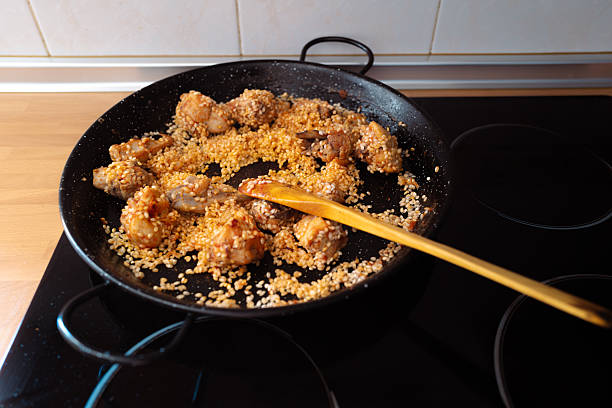
Heat words can be the most confusing because they describe both temperature and intention. “Sauté” means cooking quickly in a little fat over medium-high heat, usually with some movement. “Sear” means high heat and no crowding, so meat or vegetables get a browned crust instead of steaming. “Sweat” sounds odd, but it simply means cooking vegetables gently in fat until soft and translucent, not browned. “Simmer” is a lazy bubble, the kind that breaks the surface now and then. “Boil” is vigorous, and a “rolling boil” cannot be stirred down. If a recipe says “bring to a simmer,” turn the heat down as soon as bubbles start. A hard boil can make sauces break or pasta water cloudy.
Oven directions matter too. “Preheat” is not a suggestion; it gives baked goods a reliable start and helps roasting vegetables brown. “Bake” and “roast” both use dry oven heat, though roast usually means higher heat and a browned exterior. “Broil” uses intense top heat for a quick char or melted cheese, so stay nearby. “Al dente” means pasta or vegetables still have a slight bite. “Fork-tender” means a fork slides in with little resistance, often for braised meat or root vegetables. “Rest” is the pause after cooking meat, letting juices redistribute so they end up in the slice, not on the cutting board.
Some jargon is about quantity and sequence. A “pinch” is about an eighth of a teaspoon, a “dash” is a little less, and a “scant” cup is slightly under. “Heaping” means the spoon is mounded, not leveled. “Divided” means the ingredient is used in more than one step, so read ahead before you dump it all in. “Dredge” means coat lightly in flour, and “deg/laze” means splash liquid into a hot pan and scrape up the browned bits. “Reduce” means simmer a liquid until it thickens and concentrates. These small cues prevent big surprises.
Finally, there are the phrases that guide your senses. “Mise en place” means everything measured and ready before you turn on the stove. “Season to taste” means add salt, pepper, or acid, then taste and adjust. “Until golden” or “until fragrant” asks you to watch and smell, not just clock-watch. Recipe times are guides, not guarantees, because pan size, stove strength, and ingredient temperature vary. Start checking early, taste as you go, and trust your eyes, nose, and ears. When you understand the jargon, you stop following rules blindly and start cooking with instinct. That is the real dinner goal: fewer takeout nights, less mid-recipe panic, and more meals that feel like yours.