

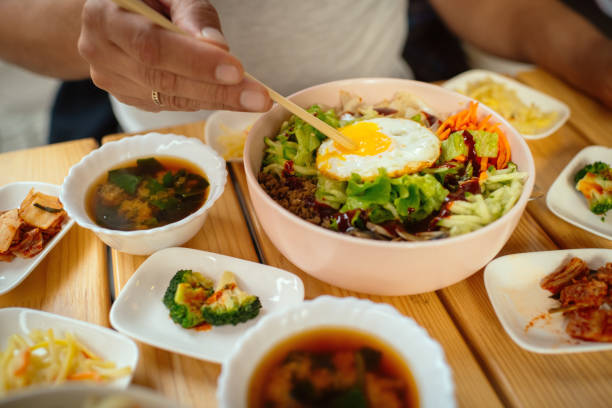
Bibimbap literally means “mixed rice,” and that’s exactly what you do—stir together warm rice, sautéed vegetables, a protein of your choice, and a rich, gochujang-based sauce until everything is gloriously combined. But the magic is in the details. The foundation is a bowl of steaming short-grain rice, preferably a little sticky to catch every bit of sauce. On top, you arrange a rainbow of vegetables: crisp bean sprouts, sautéed spinach, julienned carrots, zucchini, and mushrooms. These are seasoned simply with sesame oil, garlic, and salt, allowing each component to shine. A fried egg with a runny yolk crowns the bowl, acting as the ultimate sauce when broken and stirred in.
What makes bibimbap so perfect for busy households is its flexibility. It’s the ultimate “clean out the fridge” dish. Any vegetable you have—broccoli, bell peppers, even leftover roasted sweet potatoes—can be prepped quickly and added. For protein, you can use thinly sliced beef (bulgogi-style), chicken, firm tofu, or even canned tuna in a pinch. The sauce is a simple whisk of gochujang (Korean chili paste), sesame oil, rice vinegar, and a touch of sugar or honey. If you don’t have gochujang, a mix of sriracha and miso paste works surprisingly well. You can serve it in individual bowls or on a large platter for a family-style meal.
The process is straightforward and can be broken into steps that overlap. Cook your rice first—a rice cooker or instant pot makes this effortless. While the rice steams, prep your vegetables. A hot skillet with a drizzle of oil will cook each vegetable in just two to three minutes. You can even cook multiple vegetables in the same pan if you wipe it between batches. The protein can be cooked simultaneously in another pan. Everything comes together in ten minutes of active time. The result is a dinner that feels special but requires no more effort than a stir-fry.
Bibimbap also teaches a valuable lesson about leftover transformation. Those last few carrots and half a bag of spinach in the fridge? They’re destined for glory. The dish thrives on variety, so feel free to swap ingredients based on what you have. The only non-negotiable is the rice and the sauce—the rest is up to you. This adaptability makes it a go-to for households where schedules vary. You can prep the vegetables and rice ahead of time, then each person can assemble their own bowl, adding the toppings they prefer. It’s interactive, satisfying, and oddly therapeutic.
Beyond its practicality, bibimbap offers a window into Korean cuisine’s deep respect for balance. The five colors of traditional bibimbap—green, red, yellow, white, and black—represent the five elements of yin and yang philosophy, aiming to nourish both body and spirit. While you don’t need to follow this strictly, there’s something grounding about eating a bowl that includes a variety of textures, temperatures, and flavors. The spicy, savory, sweet, and nutty notes dance together, making each bite slightly different from the last.
For those new to Korean cooking, bibimbap is an inviting entry point. It requires no exotic equipment, and most ingredients are available in standard grocery stores. If you can’t find gochujang, many stores now carry it in the international aisle, or you can order it online. Once you have it, you’ll find yourself adding it to everything from scrambled eggs to roasted vegetables. It’s that versatile.
So next time you’re staring at a fridge full of odds and ends, or you just want a dinner that feels celebratory without the fuss, remember bibimbap. It’s proof that a world of cuisine can fit into a single bowl, and that a busy household doesn’t have to sacrifice flavor for efficiency. With a little prep and a lot of mixing, you can bring the vibrant, balanced heart of Korean cooking to your table tonight.