

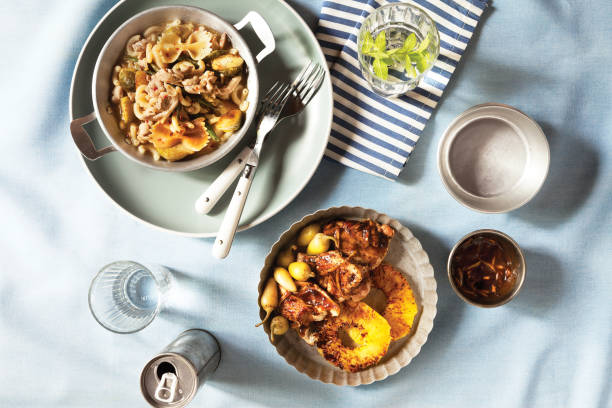
The first step in the Dinner Goals mindset is acknowledging that your pantry is a treasure chest, not a wasteland. When you open those cabinets and see a can of tuna, a box of pasta, maybe some diced tomatoes or a jar of olives, you’re not looking at random leftovers. You’re looking at the building blocks of a meal that can come together in under twenty minutes. The key is to plan, not for a specific dish, but for a flexible approach. Every time you restock your pantry, think about pairing canned proteins with long-lasting starches. Canned tuna is a perfect example because it’s high in protein, requires no cooking, and can be transformed with just a few other shelf-stable ingredients. By having a few cans of tuna, a couple of pasta shapes, and some pantry staples like olive oil, garlic, onions, and canned tomatoes, you’ve already won half the dinner battle. The strategy isn’t to memorize a hundred recipes; it’s to know that you can always fall back on something like this.
Now, let’s talk about the actual dish. This canned tuna pasta is not your grandma’s tuna casserole—though we love that too. It’s a light, flavorful, and surprisingly elegant meal that feels like you tried, even when you didn’t. You start by boiling your pasta. While that’s happening, you open a can of quality tuna packed in olive oil—the oil itself is flavor gold. In a skillet, sauté a little garlic (which, by the way, keeps for weeks in your pantry) and a pinch of red pepper flakes if you want a whisper of heat. Then, you add your canned tomatoes—whole, crushed, or diced all work. Let them simmer until they thicken slightly. Drain your tuna (reserving the oil if you want to boost flavor) and flake it into the sauce. Stir, taste, adjust with salt and pepper. When the pasta is al dente, toss it directly into the skillet with a splash of its cooking water to bring the sauce together. Finish with a squeeze of lemon if you have one (not canned, but even a splash of vinegar works), and top with something crunchy—maybe breadcrumbs you toasted in a dry pan, or even crushed potato chips if you’re feeling wild. Dinner is done. No fancy ingredients, no stress.
This is where the planning mindset really shines. You didn’t need to decide what to eat at 6 PM with a hungry family. You already knew that your pantry could deliver. The strategy is about having a shortlist of these “pantry meals” in your back pocket. Maybe it’s this tuna pasta, maybe it’s a bean and rice bowl, or maybe it’s a can of soup jazzed up with spices and a hard-boiled egg. The point is, when you build your shopping list around versatile staples rather than specific recipes, you free yourself from the tyranny of the dinner decision. You become a problem-solver, not a chef. And that’s a huge win for busy households.
So next time you open your pantry and see that can of tuna, don’t think “I have nothing to eat.” Think, “I have everything I need for a solid dinner.” The mindset shift from scarcity to strategy is what makes Dinner Goals work. It’s not about perfection; it’s about progress. It’s about knowing that a simple, delicious meal is never more than a few cans and a pot of boiling water away. Canned tuna pasta isn’t just a recipe—it’s proof that with a little planning, your pantry is always ready to help you meet your dinner goals.