

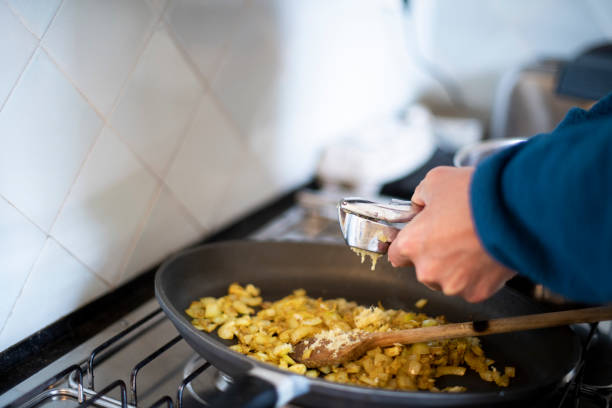
First, let’s break down the term “sauté.” It comes from the French word for “jump,” which describes how the food moves in the pan when you toss it. But for busy households, sautéing simply means cooking food quickly in a small amount of fat over medium to medium-high heat. The goal is to soften and brown the ingredients without burning them. When it comes to onions and garlic, this technique unlocks layers of sweetness and aroma that raw alliums simply can’t offer. You don’t need fancy equipment, just a sturdy skillet, a little oil or butter, and a watchful eye.
Start with your onions. For most recipes, a medium-sized yellow or white onion is perfect because it balances sharpness and sweetness. Dice it into even pieces, about a quarter-inch thick. Uniform size matters here, because uneven chunks will cook at different rates, leaving you with some burnt bits and some raw pieces. Heat your pan over medium heat, then add enough oil to coat the bottom, about one to two tablespoons. Butter adds richness, but it burns easily, so a combination of oil and butter works best, or use oil alone for a cleaner flavor. Once the oil shimmers, add the onions and spread them into an even layer. Let them cook without stirring for a minute or two, so they start to soften and release their sugars. Then stir occasionally, scraping up any browned bits. After about five to seven minutes, the onions will turn translucent and slightly golden. This is when they’re ready for the next step: welcoming the garlic.
Garlic is the star player that enters late in the game. Why? Because garlic burns much faster than onions. If you add it at the beginning, it can turn bitter and acrid within seconds. Instead, once your onions are soft and fragrant, push them to the sides of the pan to create a small empty space in the center. Add a little more oil if the pan looks dry, then drop in your minced garlic, usually one to three cloves depending on your recipe. Stir the garlic gently in that hot spot for about thirty seconds to a minute. You will smell the difference almost immediately: raw garlic’s pungent bite transforms into a warm, nutty, inviting aroma. As soon as you catch that scent and the garlic turns barely golden, stir it into the onions. From here, you can proceed with your recipe, whether that means adding tomatoes, broth, or other ingredients.
A few common pitfalls can trip up even experienced home cooks. High heat is the biggest enemy. If your pan is too hot, the onions will char on the outside while staying crunchy inside, and the garlic will go from raw to black in a blink. Medium heat gives you control. Crowding the pan is another issue. If you pile in too many onions, they steam instead of sauté, releasing water and turning mushy. Cook in batches if you need to, or use a larger pan. Finally, remember that salt is your friend. A pinch of salt added early helps draw moisture out of the onions, speeding up the softening process and deepening flavor.
Mastering this simple technique transforms your cooking in ways that ripple through every meal. The next time a recipe says “sauté until fragrant,” you will know exactly what to look for: onions that are tender and lightly browned, garlic that smells warm and inviting, and a pan that sizzles with promise. This is the kind of foundational skill that saves time and reduces stress because you’re no longer guessing. You’re in control. And that, right there, is the heart of Dinner Goals: making dinner planning achievable, delicious, and even a little fun. So grab a skillet, some onions, and a clove or two of garlic. You’ve got this.