

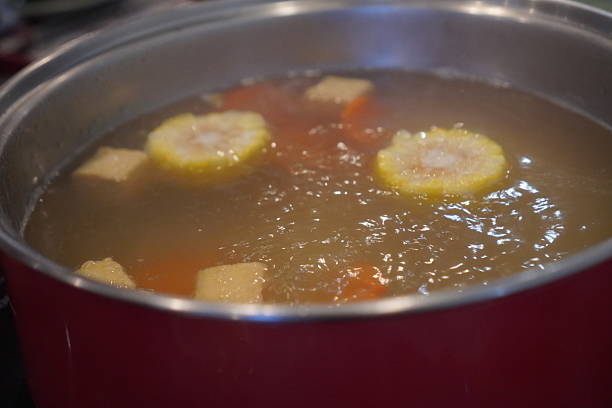
Let’s start with a quick visual. A boil is what you see when you cook pasta or hard-boil eggs. It’s a vigorous, rolling action with large bubbles breaking the surface from all sides. The liquid is moving quickly, almost violently, and steam rises steadily. A simmer, on the other hand, is much gentler. You’ll see small, delicate bubbles rising lazily from the bottom of the pot, barely disturbing the surface. Think of a hot spring versus a churning ocean. Both are hot, but one is calm and the other is frantic.
Why does this matter for your soup? Because heat intensity directly affects texture, flavor, and clarity. When you boil a soup aggressively, you’re applying constant high heat that can break down proteins too quickly. This is fine for something like a quick vegetable broth where you want to extract flavor fast, but for soups with tender ingredients like chicken, fish, or delicate vegetables, boiling can turn them tough, mushy, or stringy. The rapid agitation also emulsifies fats and starches, which can make your broth cloudy and greasy rather than clear and clean-tasting.
Simmering, however, is the sweet spot for most soup recipes. It allows flavors to meld slowly without harsh agitation. The collagen in bones and connective tissue dissolves gently into the liquid, giving your broth body and richness. Meats stay tender because they’re cooked at a lower, more consistent temperature—typically around 185 to 205 degrees Fahrenheit, compared to boiling’s 212 degrees. Vegetables hold their shape and sweetness, and herbs release their oils without becoming bitter. A good simmer also reduces the liquid gradually, concentrating flavor without scorching the bottom of the pot.
So how do you achieve a proper simmer? After you bring your soup to a boil (usually to kickstart cooking or dissolve ingredients), turn the heat down to low or medium-low. You should see a few lazy bubbles rising, but not a full rolling boil. If you’re using a gas stove, the lowest setting might still be too high; try adjusting the burner or moving the pot slightly off center. On an electric stove, you may need to shift the pot to a smaller burner or use a heat diffuser. A lid can help maintain temperature, but leave it slightly ajar if you want the soup to reduce. Practice paying attention to the sound, too—a simmer is quiet and content, while a boil is noisy and aggressive.
One common mistake is confusing a rapid simmer with a gentle boil. If you see big bubbles popping forcefully, you’re probably past simmer. The fix is simple: remove the pot from the heat for a moment, then lower the burner and return it. Your soup will be happier for it. Another tip is to use a thermometer for a few weeks until you get a feel for the visual cues. Once you know what 195 degrees looks like, you’ll never need the gadget again.
Of course, there are exceptions. Hearty bean soups or lentil stews can handle a bit more heat early on, especially if you’re trying to soften tough legumes. And some recipes intentionally call for a rapid boil to emulsify ingredients into a creamy texture, like in certain chowders or pureed soups. But as a general rule, simmer is your friend. It’s patient, forgiving, and far less likely to ruin your dinner after a long day.
Mastering the simmer versus boil difference is one of those small culinary secrets that transforms a decent soup into a memorable one. It gives you control over your pot and confidence in your cooking. Next time you’re following a recipe, trust that instruction to “reduce to a simmer.” Your soup—and your schedule—will thank you.